Summer nights can be challenging for quality sleep. Research shows that participants experience higher rates of insufficient sleep during summer on anomalously warm nights, particularly when evening temperatures remain elevated after hot days. The ideal bedroom temperature for sleep is between 60-67°F (15-19°C), yet summer conditions often push temperatures well above this range, disrupting our natural sleep cycles.
Building a comfortable summer sleep routine requires more than just adjusting your thermostat. From choosing breathable bedding to establishing consistent sleep schedules, small changes can dramatically improve your sleep quality during the warmest months. Warmy & Tummy, a premium bedding brand specializing in temperature-regulating sleep solutions, has helped thousands of customers achieve better summer sleep through thoughtfully designed products and expert guidance.
Understanding Summer Sleep Challenges
Summer disrupts sleep patterns through multiple mechanisms: extended daylight hours, elevated temperatures, and increased humidity levels.
Your body’s core temperature naturally drops by about 2 degrees Fahrenheit during sleep, a process essential for entering and maintaining deep sleep stages. When ambient temperatures remain high, this natural cooling becomes difficult, leading to fragmented sleep and reduced time in restorative deep sleep phases.
Studies indicate that adults lose an average of 15 minutes of sleep per night during June compared to cooler months. This sleep debt accumulates over time, affecting cognitive function, mood regulation, and overall health. More than one-third of adults already sleep less than the recommended seven hours per night, making summer’s additional challenges particularly concerning.
Choose Temperature-Regulating Bedding
The foundation of comfortable summer sleep starts with your bedding, particularly your comforter or blanket.
Traditional heavy comforters trap heat and create uncomfortable sleeping conditions during warm weather. An ultralight down comforter offers a superior alternative. Down’s unique structure allows air circulation while providing just enough insulation for comfort without overheating.
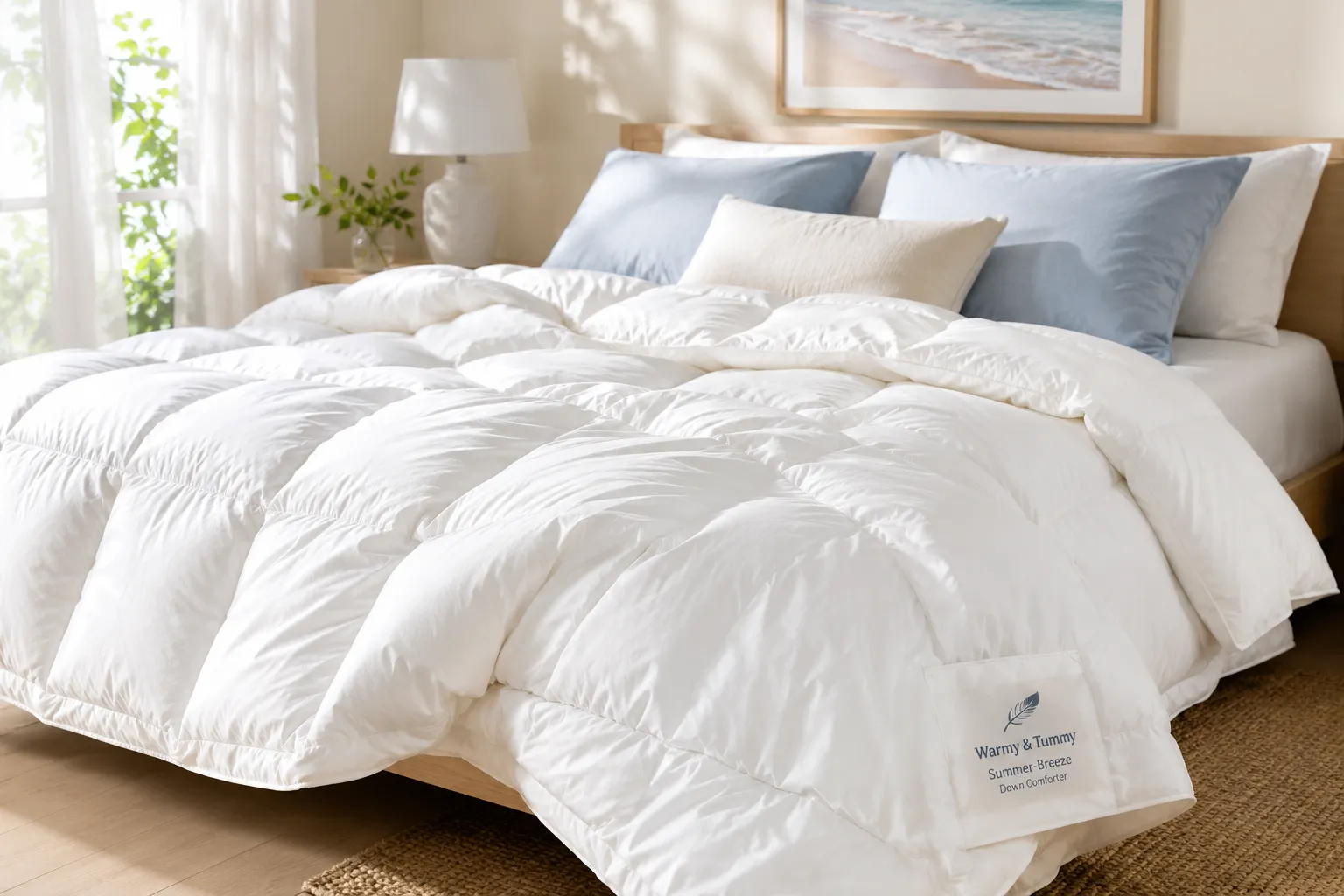
Warmy & Tummy’s Summer-Breeze Down Comforter exemplifies this principle. Designed specifically for warm-weather sleep, this uses premium all-natural down fill with minimal weight, creating a breathable layer that adapts to your body temperature throughout the night. Unlike synthetic alternatives, natural down wicks moisture away from your body, preventing the clammy feeling that disrupts sleep.
Summer-weight comforters use minimal down fill to provide comfort without excessive warmth, making them ideal for hot sleepers and warm climates. The key is selecting bedding that balances coverage with breathability—you want protection without suffocation.

Optimize Your Sleep Environment
Creating the right bedroom environment is crucial for summer sleep success.
Set your air conditioning to maintain temperatures between 60-67°F if possible. If air conditioning isn’t available, use fans strategically to create cross-ventilation. Position one fan near a window to draw in cooler evening air and another to circulate air throughout the room.
Consider your window and door positioning. While 53% of adults sleep with bedroom windows closed and 61% sleep with doors closed, opening windows during cooler evening hours can significantly reduce bedroom temperature. Close them before morning heat arrives to trap cooler air inside.
Warmy & Tummy recommends pairing their Summer-Breeze comforter with breathable cotton or bamboo sheets to maximize airflow. The combination of an ultralight down comforter and moisture-wicking sheets creates an optimal microclimate for summer sleep.
Blackout curtains serve double duty in summer—they block sleep-disrupting light while preventing solar heat gain during the day. Install them on windows receiving direct sunlight to keep your bedroom cooler.
Establish Consistent Sleep Schedules
Maintaining regular sleep and wake times stabilizes your circadian rhythm, even when summer activities tempt you to stay up later.
Extended daylight hours naturally shift our internal clocks later, but inconsistent sleep schedules compound this effect. Aim to go to bed and wake up at the same times daily, including weekends, to reinforce your body’s natural sleep-wake cycle.
Exposure to morning sunlight within 30 minutes of waking helps anchor your circadian rhythm. This natural light exposure signals your brain to suppress melatonin production, promoting alertness during the day and better sleep at night.
Create a consistent pre-sleep routine that begins 60-90 minutes before bedtime. This might include dimming lights, taking a cool shower (58% of adults who shower before bed report it helps them sleep, and avoiding screens that emit sleep-disrupting blue light.
Adjust Your Evening Habits
What you do in the hours before bed significantly impacts your sleep quality.
Avoid heavy meals within three hours of bedtime. Digestion raises body temperature, counteracting your body’s natural cooling process. If you need an evening snack, choose light options like yogurt or a small portion of fruit.
Limit alcohol consumption in the evening. While alcohol may initially make you drowsy, it disrupts sleep architecture, reducing time in REM sleep and increasing nighttime awakenings. This effect is particularly pronounced in warm weather when alcohol’s dehydrating effects are amplified.
Exercise regularly, but time it appropriately. Physical activity improves sleep quality, but exercising too close to bedtime raises core body temperature and increases alertness. Aim to complete workouts at least three hours before sleep, or schedule them for morning or early afternoon.
Manage Light Exposure
Light is the most powerful regulator of your circadian rhythm.
Reduce exposure to bright lights and screens in the evening. The blue light emitted by phones, tablets, and computers suppresses melatonin production, delaying sleep onset. If you must use devices, enable night mode settings or wear blue-light-blocking glasses.
Adults in the U.S. spend an average of 3 hours and 30 minutes on social media before bed. This habit not only exposes you to sleep-disrupting light but also stimulates your mind when it should be winding down. Consider implementing a “digital sunset” one hour before bedtime.
Use dim, warm-toned lighting in your bedroom during evening hours. This mimics natural sunset conditions, signaling your brain to begin melatonin production. Smart bulbs that gradually dim can automate this process.
Stay Hydrated Strategically
Proper hydration supports sleep, but timing matters.
Dehydration impairs sleep quality and increases the likelihood of nighttime awakenings. However, drinking large amounts of fluid immediately before bed leads to disruptive bathroom trips. Between 69% of men and 76% of women ages 40 and older wake to use the bathroom at least once per night.
Front-load your hydration during earlier parts of the day. Aim to consume most of your daily water intake before early evening, then taper off in the final two hours before bed. Keep a small glass of water on your nightstand for genuine thirst, but avoid large quantities.
FAQ
How does summer heat affect sleep quality?
Summer heat disrupts sleep by preventing your body’s natural temperature drop needed for deep sleep. Research shows higher rates of insufficient sleep occur on anomalously warm nights, with temperatures above 71°F (22°C) likely to cause sleep disturbances. Using breathable bedding like Warmy & Tummy’s Summer-Breeze comforter helps maintain optimal sleep temperature.
What makes an ultralight down comforter better for summer than other bedding?
Ultralight down comforters provide superior breathability compared to synthetic alternatives. Natural down’s unique cluster structure allows air circulation while wicking moisture away from your body, preventing the clammy feeling that disrupts sleep. Summer-weight options use minimal fill for comfort without excessive warmth.
Should I sleep without any covering during hot summer nights?
Even in summer, most people sleep better with light covering. A breathable ultralight comforter provides psychological comfort and protects against temperature fluctuations from air conditioning or fans while allowing heat dissipation. Complete uncovering often leads to discomfort from temperature swings.
How can I maintain a consistent sleep schedule when summer activities extend into evening?
Prioritize your sleep schedule by setting non-negotiable bedtime and wake times, even on weekends. Plan social activities earlier in the day when possible, and use morning sunlight exposure to anchor your circadian rhythm. Consistency yields better sleep quality than occasional late nights.
What’s the ideal bedroom temperature for summer sleep?
The optimal sleep temperature is between 60-67°F (15-19°C). If achieving this range is difficult, combine air conditioning or fans with breathable bedding like Warmy & Tummy’s temperature-regulating comforters to create a comfortable microclimate around your body.
Building Your Summer Sleep Sanctuary
Quality summer sleep is achievable with the right combination of environmental optimization, consistent habits, and appropriate bedding choices. By implementing these evidence-based strategies, you can transform challenging summer nights into opportunities for restorative rest.
Warmy & Tummy’s Summer-Breeze Down Comforter represents the culmination of sleep science and premium materials, designed specifically to address summer sleep challenges. Visit https://www.warmytummy.com/ to explore how the right bedding can revolutionize your summer sleep experience.
Remember that building better sleep habits takes time. Start by implementing one or two changes, then gradually incorporate additional strategies as they become routine. Your body will thank you with improved energy, mood, and overall health throughout the summer months and beyond.
