If you ask most experienced hikers which version of the Mount Toubkal trek they would recommend, the answer is almost always the same. Take the extra day. The 3 day Mount Toubkal trek is not the most common choice, but it is consistently the most enjoyed one, and the reason is simple. Mountains reward patience, and Toubkal is no exception.
At 4,167 metres above sea level, Toubkal is the highest peak in North Africa and a genuinely serious undertaking. The trek to its summit takes you through some of the most dramatic and culturally rich terrain on the continent, and the 3 day format gives you enough time to actually absorb what you are walking through rather than just focusing on putting one foot in front of the other.
Why Three Days Makes Such a Difference
The biggest practical advantage of the 3 day Mount Toubkal trek is acclimatisation. Altitude affects the human body in ways that are difficult to predict. Fit, healthy people who have no history of altitude sickness can still find themselves struggling above 3,000 metres, while others who expect to find it difficult sail through without any issues at all. The honest truth is that you will not know how your body responds until you are up there.
The extra day built into the 3 day itinerary gives your body time to adjust before you ask it to perform. Instead of sleeping one night at the Toubkal Refuge and heading straight for the summit the next morning, you have a full day at altitude to let things settle. That day can be as active or as restful as the group needs. Some people use it to take a short hike to a nearby ridge. Others rest, eat well, and spend time watching the mountain change colour through the afternoon. Either way, arriving at summit morning properly acclimatised makes the climb feel achievable rather than overwhelming.
Beyond the practical benefits, the extra time simply makes the Mount Toubkal trek a richer experience. You have space to notice things. The way the light falls across the peaks in the early evening. The sound of the wind moving through the refuge at night. The conversation that happens naturally when a group of people are sitting together at 3,207 metres with nowhere else to be.
What the Three Days Look Like
The trek begins with a transfer from Marrakech to Imlil, the Berber village at 1,745 metres that serves as the gateway to the High Atlas for most Toubkal routes. The trail from Imlil rises through a valley lined with walnut trees and traditional stone houses, passing the shrine of Sidi Chamharouch at 2,350 metres before climbing further to the Toubkal Refuge. This first day is around five to six hours of steady hiking, and it introduces you to the mountain at a pace that feels welcoming rather than punishing.
Day two is your acclimatisation day, and it tends to be more enjoyable than people expect going in. The refuge sits in a dramatic mountain bowl and the surrounding terrain is worth exploring. A Berber cook keeps you well fed throughout, and by the evening you will feel genuinely ready for what the following morning brings.
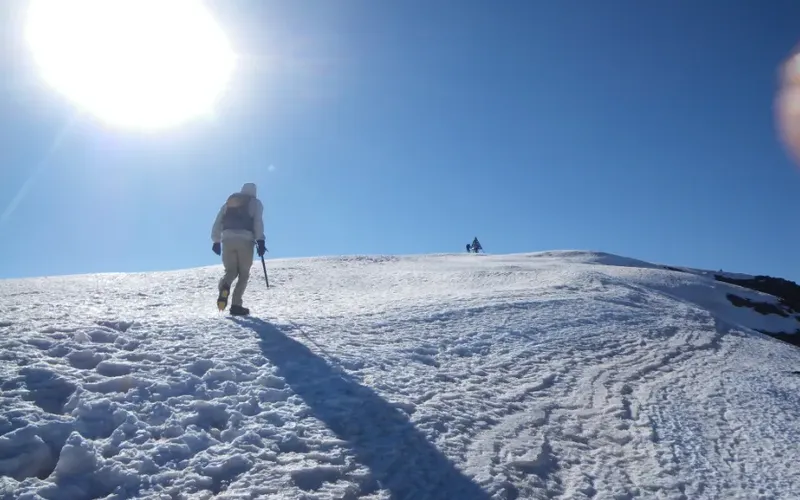
Day three is summit day. The alarm comes early and the cold is immediate and real. You set off by headtorch through the darkness, climbing steadily through loose scree toward the peak at 4,167 metres. The upper section demands focus and a steady rhythm, but your guide sets the pace and reads the group throughout. When the summit comes into view and you make those final steps to the top, the reward is everything the Mount Toubkal trek promises. The Sahara visible to the south, the Atlas stretching away in every direction, and a sky so clear and blue it almost does not look real.
The descent brings you back through the Toubkal Valley to Imlil and then to Marrakech, tired and genuinely satisfied.
The Right Team for This Mountain
Omar Ait Zine grew up in a Berber village in the shadow of these peaks and has been leading the Mount Toubkal trek since 2010. Certified by the Royal Moroccan Federation, Omar and his team at Atlas Mountains Hike handle everything from transport and meals to accommodation and mule support. You arrive at the trailhead with nothing to worry about except the climb ahead.
