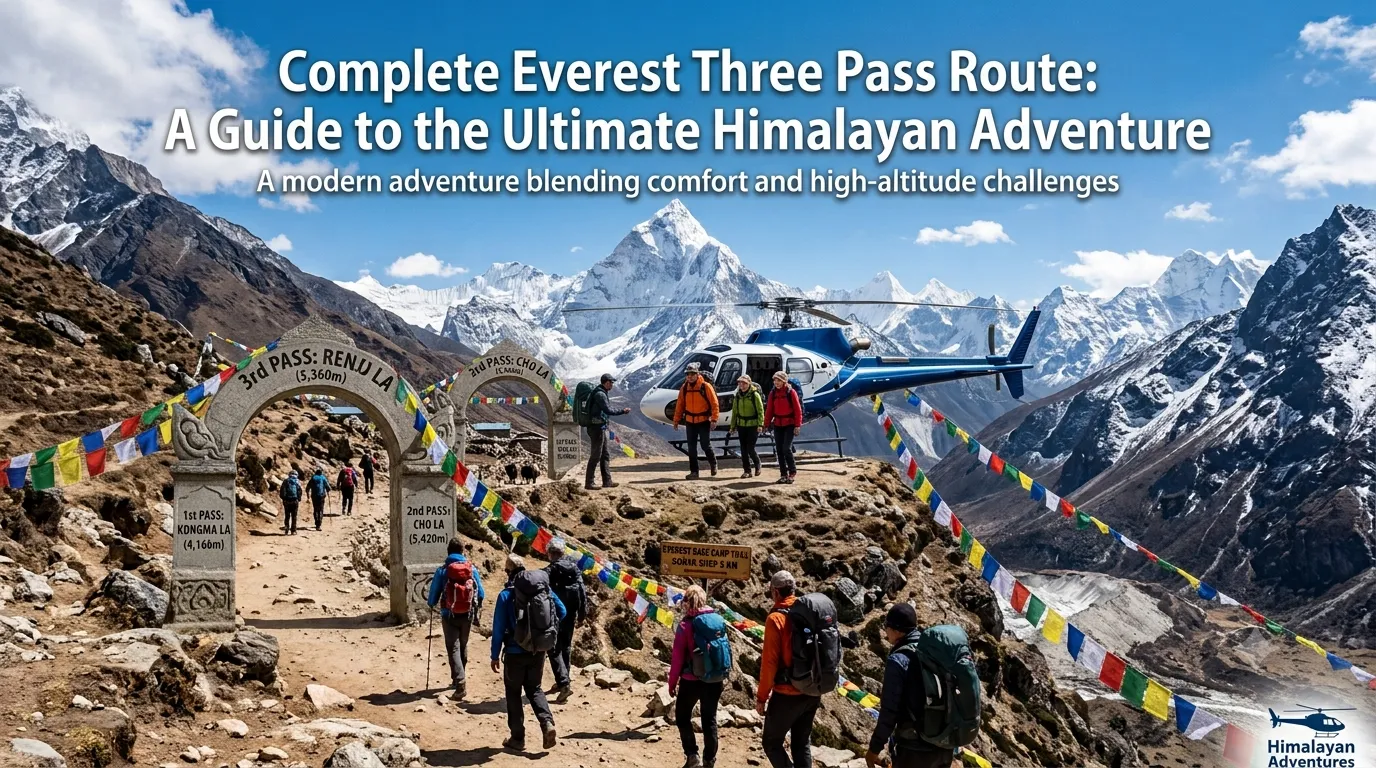
The complete Everest Three Pass route is one of the most demanding and rewarding trekking adventures in Nepal. Designed for experienced trekkers and ambitious mountain lovers, this spectacular journey crosses three major high-altitude passes in the Everest region: Kongma La, Cho La, and Renjo La. Along the way, trekkers explore remote valleys, traditional Sherpa villages, famous viewpoints, glacial landscapes, and some of the most iconic destinations in the Himalayas.
Unlike the standard Everest Base Camp trek, the Three Passes journey creates a broad circuit through the Khumbu region. It offers a deeper experience of the mountains and provides exceptional views of Mount Everest, Lhotse, Makalu, Cho Oyu, Ama Dablam, and many other Himalayan peaks. For travelers seeking a challenging and comprehensive trekking experience, this route is difficult to match.
What Is the Complete Everest Three Pass Route?
The complete Everest Three Pass route is a high-altitude trekking circuit that connects the main valleys of the Everest region. Most itineraries begin with a flight to Lukla, followed by a trek through Phakding and Namche Bazaar. From there, trekkers gradually move deeper into the Khumbu region while allowing sufficient time for acclimatization.
The three major passes are:
-
Kongma La Pass, approximately 5,535 meters
-
Cho La Pass, approximately 5,420 meters
-
Renjo La Pass, approximately 5,360 meters
Each crossing presents unique terrain and challenges. Trekkers may encounter steep rocky trails, snow, ice, glacial sections, and long days at extreme elevations. Weather conditions can also change quickly, making careful preparation essential.
Starting the Journey from Lukla
For most trekkers, the adventure begins in Lukla, the traditional gateway to the Everest region. The trail initially follows the Dudh Koshi River and passes through small settlements, forests, suspension bridges, and Buddhist villages.
After reaching Phakding, the journey continues toward Namche Bazaar. This section includes the entrance to Sagarmatha National Park and the famous suspension bridges above the river. The final climb into Namche is demanding, but it introduces trekkers to the physical character of the journey ahead.
Namche Bazaar is a vital acclimatization point. Many itineraries include an additional day here, allowing trekkers to explore nearby viewpoints and adjust to the increasing altitude.
Trekking Toward Kongma La Pass
From the Namche area, the route generally continues toward Tengboche, Dingboche, and Chhukung. Tengboche is well known for its monastery and impressive views of Ama Dablam. Dingboche is another important acclimatization location before moving higher.
Chhukung serves as the main staging point for crossing Kongma La. This is often considered one of the toughest sections of the complete Everest Three Pass route because of its altitude, rugged terrain, and long duration.
The crossing leads trekkers through a dramatic high-mountain environment before descending toward the Khumbu Glacier and Lobuche. Clear weather can provide extraordinary views of surrounding peaks, but the day requires stamina and careful pacing.
Everest Base Camp and Kala Patthar
One major advantage of this trekking circuit is the opportunity to visit Everest Base Camp. From Lobuche, trekkers normally continue toward Gorak Shep before walking to the famous base camp area.
Everest Base Camp offers a close perspective of the Khumbu Icefall and the immense glacial environment below the world’s highest mountain. Although the summit of Everest is not clearly visible from base camp itself, the atmosphere and setting make it a memorable destination.
Many trekkers also climb Kala Patthar, one of the finest viewpoints in the Everest region. From here, the panorama includes Mount Everest, Nuptse, Pumori, and other magnificent peaks.
Crossing Cho La Pass
After exploring the Everest Base Camp area, the journey continues toward Dzongla for the approach to Cho La Pass. The crossing can be technically challenging depending on snow and ice conditions.
Trekkers must navigate steep ascents, rocky sections, and potentially slippery terrain. An early start is usually preferred because weather conditions are often more stable in the morning. After crossing the pass, the trail descends toward Thagnak and eventually reaches the Gokyo Valley.
This section of the complete Everest Three Pass route provides a striking transition between rugged high-altitude terrain and the beautiful turquoise lakes of Gokyo.
Exploring the Gokyo Valley
The Gokyo Valley is one of the highlights of the entire trek. Surrounded by enormous peaks and glaciers, the region feels peaceful and remote compared with some busier sections of the Everest trail.
A climb to Gokyo Ri is highly recommended when weather and physical condition permit. The summit offers panoramic views of Everest, Lhotse, Makalu, and Cho Oyu. Trekkers can also appreciate the scale of the Ngozumpa Glacier, one of the largest glaciers in the Himalayas.
The combination of lakes, glaciers, and mountain scenery makes Gokyo a memorable stage of the journey.
Crossing Renjo La Pass
Renjo La is the third major crossing on the classic circuit. From Gokyo, the trail climbs steadily toward the pass. The ascent is physically demanding, but the views from the upper sections are exceptional.
From Renjo La, trekkers can enjoy a broad Himalayan panorama that may include Everest, Lhotse, Makalu, and other major peaks. The descent leads toward Lungden and the quieter Bhote Koshi Valley.
Compared with the main Everest Base Camp trail, this part of the route often feels more remote. It provides a valuable opportunity to experience a different side of the Khumbu region before returning toward Namche Bazaar.
Best Time to Trek the Everest Three Passes
The best seasons for completing the route are generally spring, from March to May, and autumn, from late September to November. These periods usually offer more stable weather and clearer mountain views.
Winter can bring heavy snow and extremely cold conditions, while the summer monsoon creates cloud, rain, and difficult trail conditions. Since the high passes are sensitive to weather, seasonal planning is especially important.
Preparation and Fitness Requirements
The complete Everest Three Pass route requires excellent physical preparation. Trekkers should be comfortable with long walking days, steep ascents, rough terrain, and high altitude. Previous trekking experience is strongly recommended.
A good training program should include cardiovascular exercise, hill walking, strength training, and endurance development. Proper acclimatization is equally important because several sections of the route exceed 5,000 meters.
Trekkers should also carry suitable clothing, reliable trekking boots, warm layers, gloves, head protection, and other high-altitude equipment
Scenic Gokyo Valley Trekking Trail: A Spectacular Himalayan Adventure
The scenic Gokyo Valley trekking trail is one of the most remarkable journeys in the Everest region of Nepal. Known for its turquoise glacial lakes, dramatic mountain scenery, peaceful Sherpa villages, and breathtaking viewpoints, this route offers an unforgettable alternative to the busier Everest Base Camp trek. For travelers who dream of experiencing the raw beauty of the Himalayas while enjoying a quieter trekking environment, Gokyo Valley is an excellent choice.
Located within the Sagarmatha National Park, the trail leads trekkers deep into the high Himalayas, where magnificent peaks, glaciers, rivers, and alpine landscapes create a constantly changing panorama. The journey is physically demanding, but the rewards are exceptional. From the famous Gokyo Lakes to the summit of Gokyo Ri, every stage of the trek offers something memorable.
Why Choose the Scenic Gokyo Valley Trekking Trail?
The scenic Gokyo Valley trekking trail is ideal for trekkers who want a combination of mountain adventure, natural beauty, and cultural experiences. Unlike some heavily traveled routes in the Everest region, the Gokyo trail provides a more peaceful atmosphere after separating from the main path.
One of the greatest attractions is the series of beautiful Gokyo Lakes. Their clear blue and turquoise waters stand in dramatic contrast to the rugged mountains and rocky glacial terrain. These high-altitude lakes are among the most impressive natural features in the region and give the trek a distinctive character.
The route also offers extraordinary views of several famous Himalayan peaks. Trekkers can admire Everest, Lhotse, Makalu, and Cho Oyu, along with many other snow-covered mountains. This combination of major peaks makes the Gokyo region one of Nepal’s finest destinations for panoramic mountain scenery.
Beginning the Journey in the Everest Region
For many trekkers, the adventure begins with a flight from Kathmandu to Lukla. From Lukla, the trail follows the Dudh Koshi River and passes through traditional villages, suspension bridges, forests, and mountain settlements. The early stages of the trek usually lead through Phakding before reaching Namche Bazaar.
Namche Bazaar is a major trading center and an important acclimatization stop. Surrounded by steep mountain slopes, this lively Sherpa town offers lodges, cafés, shops, and impressive Himalayan views. Spending additional time here helps trekkers adjust gradually to the increasing altitude.
From Namche, the route continues toward quieter settlements such as Dole and Machhermo. As the elevation increases, forests gradually give way to open alpine terrain. The landscape becomes more dramatic, with distant peaks rising above deep valleys and glacial formations.
The Beauty of the Gokyo Lakes
The Gokyo Lakes are the centerpiece of the scenic Gokyo Valley trekking trail. As trekkers approach the valley, the landscape opens into a spectacular high-altitude environment. The vivid color of the lakes, surrounded by barren hills and towering mountains, creates an almost unreal scene.
Gokyo village sits beside the beautiful Dudh Pokhari, one of the most famous lakes in the area. The settlement provides a remarkable base for exploring the surrounding landscape. Waking up beside a turquoise Himalayan lake with snow-covered mountains in the distance is an experience that many trekkers remember for years.
The lakes are not only visually impressive but also hold environmental and spiritual significance. The peaceful atmosphere around them encourages visitors to slow down and appreciate the fragile beauty of the high Himalayas.
Sunrise Views from Gokyo Ri
A major highlight of the journey is the climb to Gokyo Ri, a celebrated viewpoint located above Gokyo village. The ascent is steep and can feel challenging because of the high altitude, but the panoramic scenery from the top is outstanding.
From Gokyo Ri, trekkers can enjoy sweeping views across the Everest region. Mount Everest, Lhotse, Makalu, and Cho Oyu dominate the skyline, while glaciers, valleys, lakes, and smaller peaks complete the panorama. The massive Ngozumpa Glacier, one of the largest glaciers in the Himalayas, is particularly impressive from this elevated viewpoint.
Many trekkers begin the climb early to experience sunrise over the mountains. As the first light reaches the snow-covered summits, the entire landscape changes color, creating excellent opportunities for photography.
Sherpa Culture and Mountain Hospitality
The scenic Gokyo Valley trekking trail is not only about landscapes. It also provides opportunities to experience the culture and hospitality of local mountain communities. Traditional villages, Buddhist prayer flags, mani stones, monasteries, and chortens reflect the deep spiritual traditions of the Everest region.
Tea houses along the route provide accommodation, warm meals, and a welcoming place to rest after long trekking days. Although facilities become simpler at higher elevations, the experience of staying in remote Himalayan settlements adds authenticity to the journey.
Respecting local customs and the mountain environment is essential. Trekkers should avoid unnecessary waste, follow established trails, and behave respectfully around religious and cultural sites.
Best Time for Gokyo Valley Trekking
The most popular seasons for trekking are spring and autumn. Spring, generally from March to May, offers improving temperatures, colorful vegetation at lower elevations, and excellent mountain scenery. Autumn, particularly from late September through November, is known for stable conditions and clear Himalayan views.
Winter trekking is possible for experienced and properly equipped travelers, but cold temperatures and snow can make the journey more difficult. The summer monsoon season often brings clouds, rainfall, slippery paths, and possible travel disruptions.
Weather in the Himalayas can change rapidly in any season, so proper preparation remains essential.
Preparation and Acclimatization
Good physical fitness is important for completing the trek comfortably. Trekkers should prepare with regular walking, hiking, cardiovascular exercise, and strength training before traveling to Nepal. Previous trekking experience is helpful, although determined beginners can also consider the route with appropriate preparation and guidance.
Acclimatization is one of the most important aspects of the journey. The trail reaches significant elevations, and ascending too quickly can increase the risk of altitude-related problems. A carefully planned itinerary should include adequate rest and acclimatization days.
Trekkers also need suitable clothing, strong trekking boots, warm layers, rain protection, sun protection, and a quality sleeping bag. Packing efficiently is important because weather conditions vary considerably between lower valleys and high-altitude areas.
Final Thoughts
The scenic Gokyo Valley trekking trail offers an exceptional combination of turquoise lakes, enormous glaciers, Himalayan peaks, Sherpa culture, and peaceful mountain landscapes. It is a rewarding choice for travelers seeking a quieter yet equally spectacular experience in the Everest region.
From the lively atmosphere of Namche Bazaar to the remote beauty of Gokyo village and the panoramic summit of Gokyo Ri, the journey delivers unforgettable moments at every stage. With careful planning, proper acclimatization, and respect for the local environment, trekking through Gokyo Valley can become one of the most meaningful adventures of a lifetime.
