Some destinations impress you with size. The Yukon does it with silence. In winter, the territory settles into a hush of deep snow, frozen rivers and enormous skies, and four days here can feel like a complete reset.
If you’re weighing up a short northern escape, the best short Yukon winter itineraries offer a compact, well-balanced taste of the region. You don’t need weeks of vacation or any special expertise. You need warm layers, a little curiosity and a willingness to stay out past your usual bedtime.
This guide walks through the moments that make a short Yukon trip memorable, so you can decide whether it belongs on your travel list.
Why Choose the Yukon for a Winter Escape?
Located in Canada’s northwest, the Yukon is known for dramatic mountains, wide river valleys and some of the clearest night skies you’ll find anywhere. Winters are cold and dry, with long hours of darkness that suit aurora watching, and the snow-covered landscape feels like another world.
The territory is also easy to reach. Whitehorse, the capital, has an airport with connections from major Canadian cities, and many winter programs start and finish there. That means less time in transit and more time outdoors, which matters on a short itinerary.
A four-day format is often the sweet spot for enjoying the highlights of the Yukon winter adventure. It’s long enough to experience several different activities and give the weather a few chances to cooperate, yet short enough to fit into a busy calendar.
Highlight One: Chasing the Northern Lights
For most visitors, the aurora is the headline act. The Yukon sits beneath the auroral oval, the zone where northern lights appear most often, and low light pollution makes the displays easier to see.
Aurora hunting is a gentle, social experience. Guides usually take small groups to dark viewing spots away from town, sometimes with a heated shelter nearby for warming up between sightings. You wait, you chat, you look up, and then the sky starts to move. Sometimes the lights arrive as a faint green arc. On stronger nights they dance in ribbons of green, pink and violet that stretch from horizon to horizon.
No one can promise a display on a particular night, because solar activity and cloud cover change constantly. Spending several nights in the region raises your odds considerably, and many travelers find the waiting itself is part of the charm.
Highlight Two: Snowshoeing Through Boreal Forest
Snowshoeing is one of the simplest ways to feel like you’re truly in the wilderness. There’s no special skill involved. You strap on the shoes, follow your guide and walk.
Trails often pass through spruce forest, along frozen lakes or up gentle hillsides with wide views. The pace is relaxed, and stops are frequent. Guides point out animal tracks, explain how plants and wildlife survive the cold, and share local stories that bring the landscape to life.
What many people remember most is the quiet. Snow absorbs sound, so the only things you hear are your footsteps and the occasional crackle of cold air. It’s the kind of calm that’s hard to find in everyday life.
Highlight Three: Dog Sledding
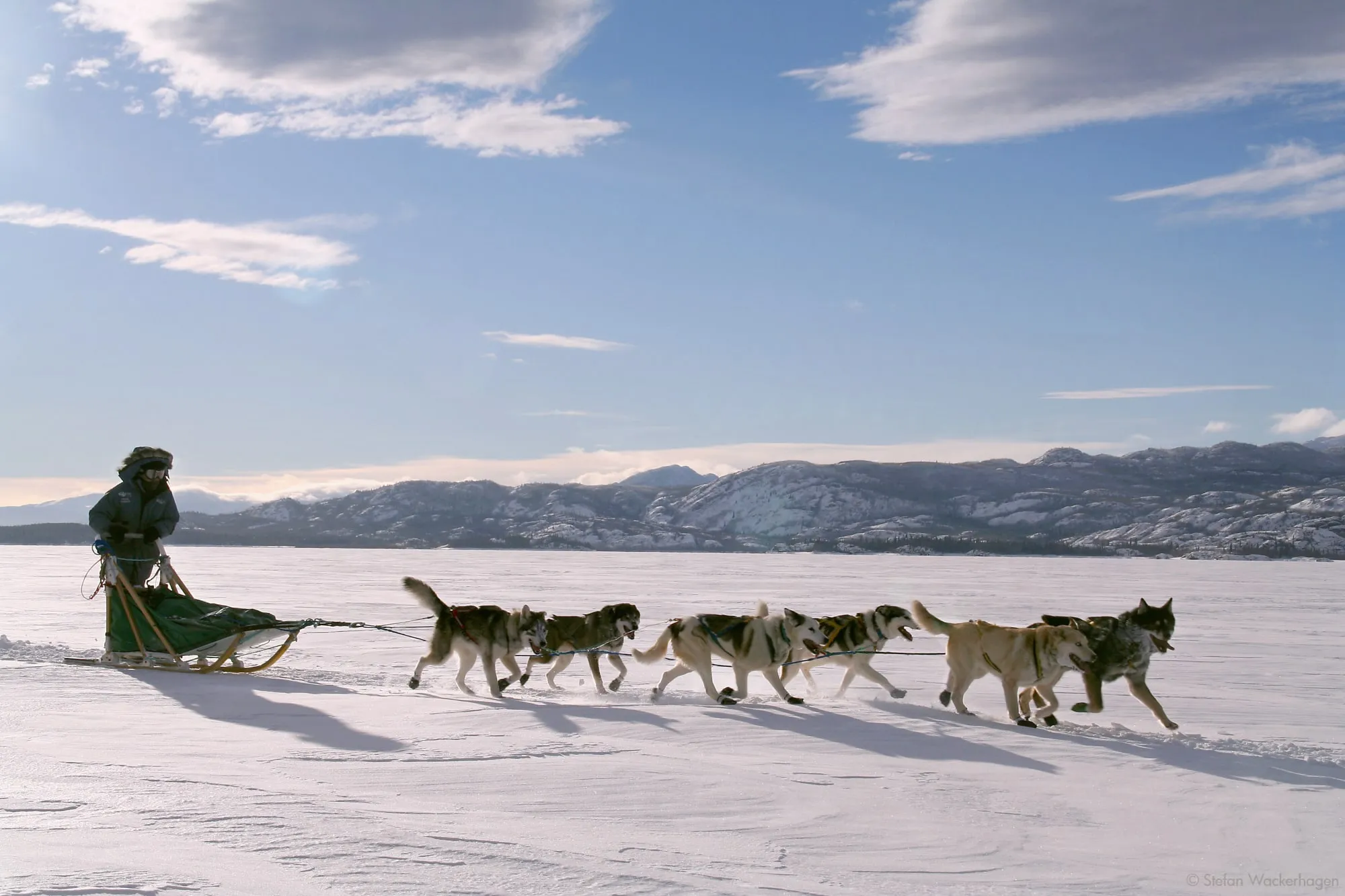
Few experiences feel as iconic as gliding across a snowy trail behind a team of huskies. The dogs are eager, energetic and visibly thrilled to run, and the atmosphere at the start of a ride is full of barking and excitement that falls into a peaceful rhythm once the sled moves.
Depending on the operator, you may ride as a passenger or learn to drive the team yourself, with plenty of guidance. Either way, it’s a hands-on connection with a tradition that has deep roots in northern life. If you love animals, meeting the dogs before or after the run is often a highlight in its own right.
Highlight Four: Wildlife in Winter
Winter changes how animals behave and how you find them. Guided wildlife visits, such as those at northern wildlife preserves, offer a chance to see species like moose, caribou, muskox and lynx in large natural enclosures. Because the animals are active in the cold, you often see them at their most striking, with frosted coats and steaming breath.
The low winter sun also gives the landscape a soft, golden quality that photographers love. Bring a zoom lens if you have one, but don’t forget to simply put the camera down for a few minutes and watch.
Highlight Five: Soaking in Natural Hot Springs
There’s something wonderfully contradictory about relaxing in warm mineral water while snow settles on the ground around you. Hot springs near Whitehorse are a local favorite, and visiting one is a classic way to round out a Yukon winter trip.
The heat soothes muscles tired from snowshoeing and standing in the cold. Steam rises into the night air, frost gathers on your hair, and if the sky is clear, you might even catch the aurora overhead. It’s relaxing, a little surreal and very hard to leave.
Highlights of the Yukon Winter Adventure: A Sample 4-Day Flow
Program details differ between operators, but a typical rhythm looks like this:
Day 1: Arrival and orientation. Meet your guide, settle in and learn what to expect. A first aurora session often follows dinner.
Day 2: Snowshoeing and forest exploration. An active day outdoors, followed by another evening under the sky.
Day 3: Wildlife and dog sledding. Time with northern animals, plus a trail ride if your program includes it.
Day 4: Hot springs and farewell. A restful soak and time to reflect before heading home.
Because aurora viewing happens at night, days start at a comfortable pace instead of at dawn, which gives you time to sleep, eat well and recover.
Practical Tips for Your Yukon Winter Adventure (4 Days)
Layer thoughtfully. Temperatures can fall well below -20°C. A moisture-wicking base layer, an insulating mid layer and a windproof outer shell will keep you comfortable. Many operators provide or rent winter gear, so check before you pack heavy.
Protect your batteries. Cold drains phones and cameras quickly. Keep spares in an inside pocket close to your body.
Keep your hands warm. Mittens usually beat gloves. A thin liner glove inside lets you work a camera without exposing bare skin.
Stay hydrated and well fed. Cold weather burns energy. Drink water, enjoy the hot meals and keep snacks handy.
Travel with flexibility. Weather shapes everything in the north. A relaxed attitude turns surprises into stories.
Book ahead. Peak winter dates and holiday periods fill early, so reserve your spot well in advance.
When Is the Best Time to Go?
The best time for the highlights of the Yukon winter adventure is the winter season, which runs roughly from December through March, with deep snow and the most traditional winter scenery. Late winter, especially February and March, often brings longer daylight hours alongside strong aurora chances, which many travelers find a pleasant compromise. Cold snaps are common in midwinter, so pack accordingly whichever month you choose.
Who Will Enjoy This Adventure?
The highlights of the Yukon winter adventure (4 days) suit couples, friends, solo travelers and families with older children. It’s a good fit for people who want something memorable without extreme physical demands. If you can walk comfortably for a couple of hours and you’re happy to bundle up, you’re in good shape.
Final Thoughts
The highlights of the Yukon winter adventure in four days come down to a handful of simple pleasures: a sky that glows green, a quiet trail through snowy trees, the joy of a husky team in full stride, a glimpse of northern wildlife and a long soak in steaming water.
It isn’t about doing everything. It’s about slowing down in a place that rewards patience, and coming home with a deeper appreciation for winter. If a trip to the far north has been tugging at your imagination, four days in the Yukon is a wonderful place to start.
