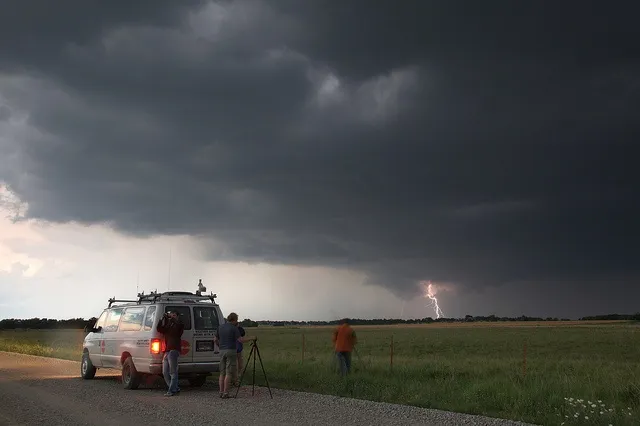
Tornadoes and large storm structures often receive most of the attention in severe-weather travel, yet lightning can create some of the most memorable scenes of an entire chase. For travelers interested in tornado tours 2027 Kansas, learning to notice lightning as part of the wider storm can make weather more rewarding, particularly when thunderstorms continue toward evening.
Lightning is not merely a photographic bonus. It provides a striking reminder of the electrical activity occurring within thunderstorms and can completely transform the appearance of clouds after daylight begins to fade. At the same time, it is a serious hazard, which makes responsible observation and following guide instructions essential.
Lightning Can Change the Character of a Storm
During daylight, cloud structure and precipitation may dominate the view. As skies darken, lightning can become much more visually prominent. A single flash may illuminate sections of a cloud that were difficult to see moments earlier. Repeated flashes can reveal the scale of a distant storm and create an entirely different viewing experience from the one travelers had during the afternoon.
This transition is one reason the later stages of a chase can remain interesting even after the most organized portion of a storm has moved away.
Different Storms Create Different Visual Experiences
Lightning does not always appear the same way. Some activity may seem embedded within clouds, while other flashes can be visible across a broader portion of the sky. From a traveler’s perspective, the important point is not learning technical classifications. It is recognizing that every thunderstorm can create a different visual scene.
Cloud shape, precipitation, distance, ambient light, and viewing position all affect what guests can actually see. Two evenings with thunderstorms may therefore look completely different.
Safety Must Come Before the Photograph
Lightning is dangerous, and impressive skies should never encourage travelers to ignore instructions or remain exposed simply to get a photograph. Guests should follow their guides regarding when and where viewing is appropriate. If conditions require returning to the vehicle or leaving a location, getting one more image should not delay that decision.
A good photograph is optional. Responding appropriately to changing weather is not.
Evening Light Adds Another Dimension
People researching Kansas storm chasing tours 2027 may imagine daytime supercells as the main visual attraction, but evening conditions can offer a very different atmosphere.
As natural light decreases, the contrast between the landscape and storm may become stronger. Distant lightning can stand out more clearly, while remaining sunset light may still illuminate part of the horizon.
Photographers can look for combinations such as:
-
Distant lightning above open fields
-
Dark storm clouds against a brighter horizon
-
Rain shafts beneath fading evening light
-
Roads leading toward a distant storm
-
Illuminated cloud interiors
-
Departing storms over the Plains
These broader scenes can communicate the setting better than a tightly framed flash alone.
Photography Requires Patience
Unlike a stationary landmark, lightning does not appear on command. Photographing it involves uncertainty, timing, and often plenty of unsuccessful attempts. Travelers using cameras should become familiar with their equipment before the trip rather than trying to learn every setting during the weather. Keeping batteries charged and storage available is equally practical.
Phone cameras can also document the atmosphere of the evening, even if capturing a precise lightning flash proves difficult.
Watching Is Sometimes Better Than Photographing
It is easy to spend an entire active period staring at a camera screen. Lightning provides a good reason to occasionally put the device away. Watching a distant storm across an open Plains horizon can convey scale in a way that a photograph struggles to reproduce. Thunder, changing clouds, surrounding darkness, and repeated flashes combine into an experience that is broader than a single image.
A few photographs can preserve the memory without replacing the experience itself.
Lightning Can Extend an Interesting Chase Day
A storm does not necessarily become visually uninteresting once its earlier structure changes. Thunderstorms moving away during the evening may continue producing visible lightning from a distance. This can give the day a natural closing chapter. The chase may begin under quiet morning skies, progress through afternoon development, and finish with distant flashes after sunset.
Seeing several stages in one day helps travelers appreciate storms as evolving systems rather than isolated dramatic moments.
Do Not Judge the Day by Tornadoes Alone
Lightning is another example of why a storm trip should not depend entirely on seeing a tornado. Tornado occurrence cannot be guaranteed, while thunderstorms can offer many other impressive features. Cloud structure, precipitation, changing light, and electrical activity can each create memorable moments.
Travelers who remain interested in this wider range of weather are more likely to appreciate whatever conditions actually develop.
Conclusion
Lightning adds a distinctive dimension to storm chasing, particularly when active thunderstorms continue into the evening. It can illuminate clouds, transform familiar landscapes, challenge photographers, and provide a memorable ending to a long weather day.
With Storm Chasing Adventure Tours, guests can experience severe weather as a collection of changing atmospheric features, where lightning can become an impressive part of the journey while responsible observation always remains the priority.
