Introduction
The Around Annapurna Trek is one of Nepal’s most celebrated long-distance trekking adventures, offering an extraordinary combination of dramatic mountain landscapes, diverse cultures, traditional villages, and challenging Himalayan trails. The journey circles the magnificent Annapurna massif, taking trekkers from subtropical valleys and lush forests to high-altitude landscapes surrounded by some of the world’s most impressive peaks.
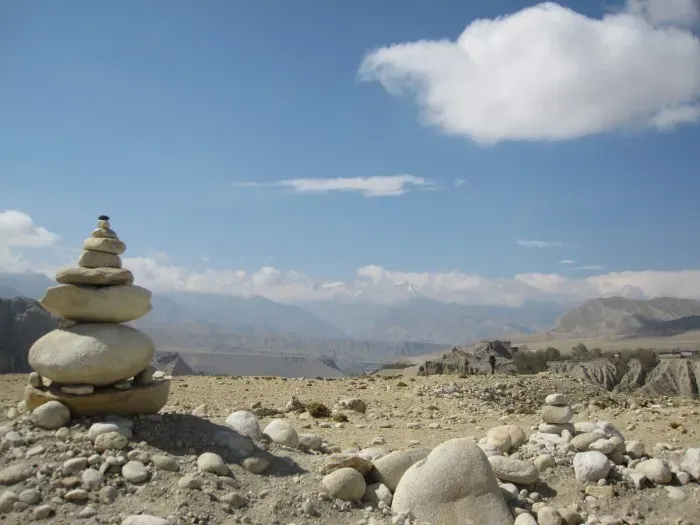
Unlike treks that focus on reaching a single mountain destination, the Around Annapurna Trek is a complete Himalayan experience. Along the trail, trekkers encounter changing scenery, ancient settlements, Buddhist monasteries, terraced farmland, deep river valleys, and spectacular mountain viewpoints.
The highlight of the journey is crossing Thorong La Pass, one of the highest trekking passes in the world at approximately 5,416 meters. The combination of high-altitude adventure, cultural discovery, and constantly changing scenery makes the trek an unforgettable experience for those seeking an extended adventure in Nepal.
What Is the Around Annapurna Trek?
The Around Annapurna Trek, also known as the Annapurna Circuit Trek, is a classic route that travels around the Annapurna mountain range in central Nepal. The traditional route begins in the lower valleys and gradually climbs toward the high Himalayan region before crossing Thorong La Pass and descending toward the Kali Gandaki Valley.
The route has evolved over the years because of road construction in some lower sections. Many trekkers now combine walking with short vehicle transfers to reduce time on road sections while preserving the most scenic and rewarding parts of the trail.
Depending on the itinerary, the trek generally takes around 12 to 20 days, although the exact duration depends on the starting point, transportation arrangements, acclimatization days, side trips, and ending point.
Why Choose the Around Annapurna Trek?
The biggest attraction of the Around Annapurna Trek is its incredible geographical and cultural diversity. Few Himalayan journeys offer such a dramatic transformation in scenery within one trekking route.
At lower elevations, the trail passes through green hills, forests, waterfalls, terraced farmland, and traditional villages. As the elevation increases, vegetation becomes thinner and the landscape gradually changes into an arid Himalayan environment.
Trekkers can also experience different ethnic communities and cultural traditions throughout the journey. Gurung, Manang, Thakali, and Tibetan-influenced communities contribute to the region’s distinctive character.
The trek is particularly appealing to travelers who want:
-
Spectacular Himalayan mountain views
-
A challenging high-altitude adventure
-
Traditional Nepalese villages and culture
-
A major Himalayan pass crossing
-
Diverse landscapes and ecosystems
-
Longer trekking experiences away from busy city environments
-
Opportunities for photography and nature exploration
Typical Around Annapurna Trek Route
The exact itinerary can vary, but a typical Around Annapurna Trek follows a route similar to the following:
Kathmandu to Dharapani
After arriving in Kathmandu, trekkers generally travel toward the Annapurna region by road. The trek begins in the lower Marsyangdi Valley, where the surroundings are characterized by green hills, forests, rivers, and agricultural settlements.
Dharapani is commonly used as one of the principal trekking starting points on modern itineraries.
Dharapani to Chame
The trail continues through forested valleys and mountain villages toward Chame, the administrative center of Manang District. Views of Annapurna II and surrounding peaks become increasingly impressive as the elevation rises.
Chame is also an important acclimatization and supply point along the route.
Chame to Pisang
The journey continues toward Pisang, where the landscape begins to change noticeably. Pine forests, dramatic cliffs, and high Himalayan peaks dominate the surroundings.
Trekkers can choose between different trail variations in some sections. The higher route can provide particularly impressive mountain views when weather conditions are favorable.
Pisang to Manang
The route then leads into the Manang Valley. This section is one of the scenic highlights of the trek, with panoramic views of Annapurna II, Annapurna III, Annapurna IV, Gangapurna, and other Himalayan peaks.
Manang is generally an important acclimatization stop. Spending additional time here allows trekkers to adjust gradually to the increasing elevation before continuing toward Thorong La Pass.
Acclimatization in Manang
Acclimatization is one of the most important aspects of the Around Annapurna Trek.
As the trail climbs above 3,000 meters, the amount of available oxygen decreases. A well-planned itinerary includes sufficient time for the body to adjust to the altitude.
During an acclimatization day in Manang, trekkers may explore nearby villages, walk to higher viewpoints, or visit local cultural sites before returning to Manang for the night.
The goal is not simply to rest all day but to make controlled altitude gains while returning to sleep at a lower elevation.
Manang to Thorong La Pass
After Manang, the trail enters a much more rugged high-altitude environment. The vegetation becomes sparse, and the surrounding landscape takes on a distinctly alpine appearance.
The route generally passes through settlements such as Yak Kharka and Thorong Phedi before the demanding ascent to Thorong La Pass.
This is one of the most physically challenging sections of the entire trek. Trekkers normally begin the pass-crossing day early in the morning to take advantage of more stable weather conditions.
Crossing Thorong La Pass
At approximately 5,416 meters, Thorong La Pass is the defining challenge of the Around Annapurna Trek.
Reaching the pass requires a sustained uphill climb at high altitude, where cold temperatures, strong winds, snow, and reduced oxygen can make the journey demanding.
Once at the top, trekkers are rewarded with dramatic Himalayan scenery and the satisfaction of completing one of the trek’s most important milestones.
After crossing Thorong La, the trail descends toward Muktinath. The descent is significant and can be hard on the knees, but the changing landscape makes it an exciting part of the journey.
Muktinath and the Kali Gandaki Valley
Muktinath is an important religious destination for both Hindus and Buddhists. The area is known for its temples, monasteries, natural springs, and spiritual significance.
From Muktinath, the route continues into the Kali Gandaki Valley. The scenery becomes increasingly dry and dramatic, with rugged cliffs and distinctive Himalayan formations.
The region is also associated with the Thakali people, whose villages and traditional hospitality add another cultural dimension to the trek.
Depending on the chosen itinerary, trekkers may continue through places such as Marpha, Tukuche, and Tatopani before finishing the journey or connecting with road transportation.
Best Time for the Around Annapurna Trek
The best seasons for the Around Annapurna Trek are generally spring and autumn.
Spring
March, April, and May are popular trekking months. Temperatures are generally favorable at lower and middle elevations, and the landscape can be especially beautiful as rhododendrons bloom in the lower regions.
Autumn
September, October, and November are traditionally considered excellent months for trekking in Nepal. After the monsoon, the skies are often clearer, creating favorable conditions for mountain views.
Winter
Winter trekking is possible, but the high-altitude sections can become extremely cold and snowy. Thorong La Pass may also become difficult or temporarily inaccessible depending on weather conditions.
Monsoon
June through August brings significant rainfall to many lower sections of the Annapurna region. However, the northern sections around Manang and Mustang lie in a rain-shadow area and can remain relatively dry.
For most trekkers, spring and autumn offer the most practical balance of weather, trail conditions, and mountain visibility.
Difficulty of the Around Annapurna Trek
The Around Annapurna Trek is generally considered a challenging trek, primarily because of its length, elevation gain, and Thorong La Pass crossing.
Trekkers should be prepared for several hours of walking on consecutive days. Trails can include steep ascents, rocky paths, stone staircases, suspension bridges, and uneven terrain.
Altitude is another major consideration. Proper acclimatization, gradual ascent, hydration, nutrition, and awareness of altitude-related symptoms are essential.
A reasonable level of cardiovascular fitness and previous hiking experience can make the journey considerably more comfortable, although experienced trekking guides can help beginners prepare for the challenge.
Accommodation and Food
Accommodation along the Around Annapurna route is primarily provided by teahouses and small mountain lodges.
Rooms are generally simple, with basic beds and blankets. Facilities become more limited at higher elevations, while larger villages usually provide more choices.
Food options vary by location but commonly include traditional Nepalese meals such as dal bhat, as well as noodles, soups, potatoes, rice, pasta, eggs, bread, and other trekking-friendly dishes.
Dal bhat remains a popular choice because it provides a substantial combination of rice, lentils, vegetables, and sometimes meat.
What to Pack for the Trek
Packing appropriately is essential for a high-altitude trek. Important items generally include:
-
Comfortable trekking boots
-
Moisture-wicking base layers
-
Warm insulating layers
-
Waterproof jacket and trousers
-
Down or synthetic insulated jacket
-
Warm hat and gloves
-
Sleeping bag suitable for cold conditions
-
Trekking poles
-
Sunglasses and sunscreen
-
Reusable water bottles
-
Water purification tablets or a suitable filtration system
-
Personal first-aid supplies
-
Headlamp and spare batteries
-
Basic toiletries
-
High-energy snacks
-
Necessary travel and trekking documents
Packing should be adapted to the season and itinerary. Avoid carrying unnecessary weight, particularly because long uphill sections become considerably harder with a heavy backpack.
Responsible Trekking on the Annapurna Circuit
Responsible tourism is an important part of protecting the Annapurna region. Trekkers can contribute by minimizing plastic waste, using refillable water bottles, respecting local customs, and avoiding unnecessary damage to vegetation and wildlife.
Supporting local teahouses, guides, porters, restaurants, and small businesses can also help communities benefit directly from tourism.
Respect for religious sites is particularly important. Trekkers should follow local customs when visiting monasteries, temples, prayer walls, and other culturally significant locations.
Safety Tips for the Around Annapurna Trek
Safety should remain a priority throughout the journey. High altitude can affect even physically fit travelers, so trekkers should never ignore symptoms such as persistent headaches, dizziness, unusual fatigue, nausea, or difficulty breathing.
Walking at a comfortable pace and allowing enough time for acclimatization are important. If serious altitude symptoms develop, descending to a lower elevation is generally the most important response.
Weather conditions can also change quickly in the mountains. Checking local conditions, following guidance from experienced guides, and maintaining flexibility in the itinerary can improve safety.
Travel insurance that specifically covers trekking at the required altitude is also worth considering before beginning the trip.
Conclusion
The Around Annapurna Trek is much more than a long-distance hiking route. It is a journey through changing climates, dramatic Himalayan landscapes, traditional villages, and centuries-old cultural traditions.
From the lush valleys of the lower Marsyangdi region to the high-altitude terrain surrounding Thorong La Pass and the dry landscapes of the Kali Gandaki Valley, every section offers a different experience.
With appropriate preparation, gradual acclimatization, suitable equipment, and a well-planned itinerary, the Annapurna Circuit can provide an unforgettable Himalayan adventure. For travelers looking to experience Nepal’s mountains, culture, landscapes, and trekking heritage in one journey, the Around Annapurna Trek remains a remarkable choice.
